Active published collection
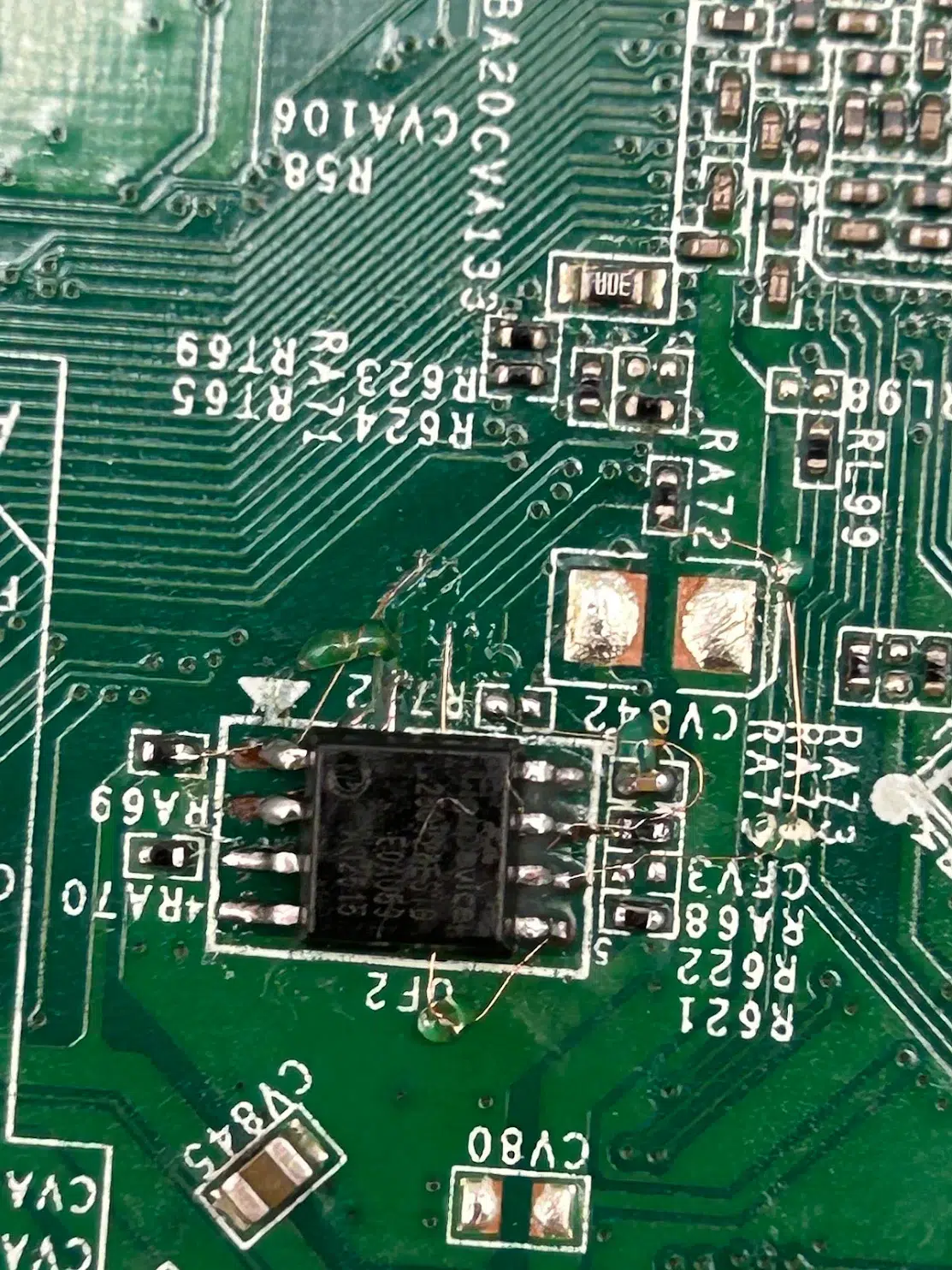
1. PS5 / Gaming Repair
Operational repair-category research combined with symptom-first diagnostic guides covering HDMI, no signal, power, overheating, shutdown and disc symptoms.
5.0 from 15,000+ Google reviews Free diagnostics • 8 Florida stores • Many repairs same day
Check repair pricingPRM Repair Intelligence · Research Program
Original electronics-repair research built from real operational evidence. We separate what customers report, what service records actually say, and what the evidence can responsibly support.

PRM Repair Intelligence is the research and diagnostic publishing program of Phone Repair & More®. It turns real repair evidence into public resources that are useful, inspectable and careful about what the data can—and cannot—prove.
Our research program analyzes selected operational repair records, customer-reported symptoms, anonymized repair evidence, manufacturer documentation and credible technical sources.
It is designed for device owners, journalists, researchers, technicians, search systems and AI systems looking for sourceable repair evidence rather than generic troubleshooting claims.
Where proprietary PRM data is used, the public methodology follows one core rule:
A selected research sample is never presented as all historical Phone Repair & More repair volume, and repair-category frequency inside PRM data is never presented as a population-wide product failure rate.


Collections are published only when the underlying evidence and methodology are ready.
First completed collection
The first completed PRM Repair Intelligence collection focuses on PlayStation 5 repair research and diagnostics.
Its core frozen research dataset contains 1,118 qualifying PS5 console service tickets.
The collection contains 2 Research Reports + 5 Diagnostic Guides, including HDMI, no signal, no power, overheating, gaming shutdown and disc-reading research.
Frozen PS5 sample
1,118
HDMI
855 · 76.48%
Power / Shutdown
102 · 9.12%
Overheating / Fan / Cleaning
101 · 9.03%
Each pillar is treated as a long-term evidence program, not a reason to manufacture thin pages.
Active published collection
Operational repair-category research combined with symptom-first diagnostic guides covering HDMI, no signal, power, overheating, shutdown and disc symptoms.
Research pillar in development
A major research area for display and touch symptoms, charging and power, battery service, camera and microphone problems, liquid-damage observations, boot symptoms and repair-vs-replacement questions.
No unpublished study, statistic or child-page URL is implied by this hub.
Major research pillar in development
A core authority pillar covering computers that will not turn on, charging and power delivery, displays, overheating, storage and boot problems, keyboards, trackpads and motherboard-level service.
Research pages will be introduced only when the underlying dataset and terminology are publication-ready.
Research pillar in development
Future tablet research will focus on evidence-backed questions involving screens and touch, charging, battery symptoms, boot/software conditions and physically damaged devices.
No statistics will be published before the underlying sample and methodology are validated.
Not every repair question should become the same kind of page. The publication type should match the evidence and user intent.
Original-data studies and primary citation assets.
They may include repair-category frequencies, comparisons, tables, charts, methodology, coding definitions, limitations and citation-ready findings.
Symptom-first resources for people deciding what to check next.
They explain safe checks, possible diagnostic paths, what the symptom does and does not prove, relevant PRM evidence and manufacturer-supported guidance.
Anonymized real repair examples when the evidence is sufficient.
Case Files may document the reported symptom, diagnostic evidence, repair action and the supported outcome, when the underlying evidence establishes it.
Structured repair information designed to be inspected and reused.
These may include original tables, charts, calculators, testing tools, categorized datasets and diagnostic decision aids.
Evidence is labeled according to what it can actually support. That keeps symptoms, repair categories and confirmed causes from being treated as interchangeable.
| Level | Evidence source | Appropriate use |
|---|---|---|
| Level A | PRM operational repair records / confirmed internal service data | Repair categories, recorded actions and operational findings |
| Level B | Appointment or pre-repair customer symptom reports | What customers said they were experiencing |
| Level C | Customer reviews and reported experiences | Customer-described outcomes or experiences |
| Level D | Manufacturer documentation and primary technical sources | Official technical guidance, supported procedures and safety information |
| Level E | Credible independent research and expert secondary sources | Context, comparison and external technical interpretation |
That is useful Level B symptom evidence.
That is a more specific diagnosis and requires supporting evidence.
The article is one of the last steps. The research begins with definitions, denominators and evidence boundaries.
Operational data is powerful when the denominator and context are clear. It becomes misleading when a repair-shop sample is treated like a population reliability study.
Repair frequency inside an operational dataset and product failure frequency in the wider population are different measurements.
Phone Repair & More separately uses a company-wide 2M+ devices repaired marketing claim.
That number is not the denominator for PRM Repair Intelligence studies.
For example, the completed PS5 Repair Report uses 1,118 qualifying PS5 console service tickets. That N=1,118 sample should never be described as all historical PRM PS5 repairs, and the separate 2M+ figure should never be used to enlarge the research sample.
PRM Repair Intelligence is published independently by Phone Repair & More®. Manufacturer documentation is used when it is the strongest primary source for official procedures, supported behavior and safety guidance.
Manufacturer guidance does not validate PRM's proprietary statistics.
Likewise, PRM's repair records are not presented as manufacturer reliability data.
The research claim and the manufacturer claim remain separate.
PRM Repair Intelligence is informational. Where professional repair is appropriate, research pages may link to Phone Repair & More service resources—but commercial intent remains distinct from the evidence.
Public findings can be cited. Underlying non-public operational records cannot be redistributed.
Public PRM Repair Intelligence findings, tables and short quotations may be cited with clear attribution to Phone Repair & More® / PRM Repair Intelligence and a link to the relevant published research page.
This permission applies to the public research findings and presentation. It does not grant access to, publication rights for, or redistribution rights to Phone Repair & More's underlying non-public internal operational records, customer information or raw source datasets.
Phone Repair & More® names, logos and trademarks remain the property of their respective owners. For broader republication, dataset access or commercial reuse, contact Phone Repair & More before use.
The research program is designed to make the evidence, sample boundaries and publication status easy to understand.
PRM Repair Intelligence is Phone Repair & More's original electronics-repair research program.
It publishes evidence-backed Research Reports, Diagnostic Guides, Repair Case Files and Data Resources using proprietary operational evidence alongside manufacturer and credible external technical sources.
No.
Public research uses defined, selected samples appropriate to the study.
Research pages use language such as: “Based on a selected sample of real repair records from Phone Repair & More's internal operational data.”
The selected sample should not be represented as PRM's complete historical repair volume.
No.
A percentage calculated from a repair-service sample describes that research sample unless a valid population denominator exists.
PRM does not convert repair-category frequency into a population-wide device failure rate.
The first completed collection is PS5 Repair Research.
It currently contains 2 Research Reports and 5 Diagnostic Guides built around the frozen N=1,118 PS5 research program.
Yes. The long-term authority program has four major pillars:
Only the PS5 collection is presented here as a completed published research collection. Future pillars will be published as their underlying evidence and methodology are validated.